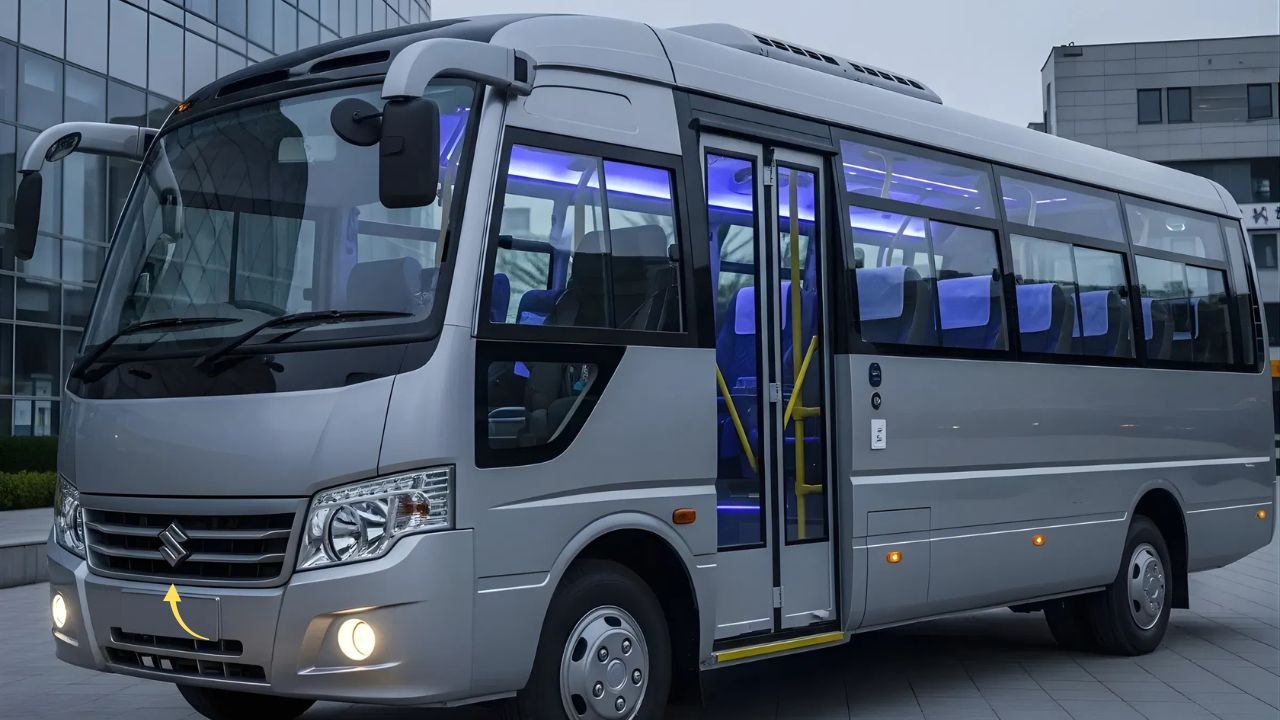
The concept of a Maruti mini bus designed for passenger transport has gained attention among small transport businesses and rural mobility operators. Built with practicality and affordability in mind, this mini bus concept focuses on offering a high seating capacity along with efficient fuel consumption.
Developed under the trusted reputation of Maruti Suzuki, the mini bus is aimed at school transport, staff movement, and short-distance public travel. With seating for up to 26 passengers, it provides a compact yet practical alternative to larger commercial buses.
Spacious 26 Passenger Seating Layout
One of the key highlights of the Maruti mini bus is its ability to accommodate up to 26 passengers. The seating layout is designed to maximize interior space while maintaining comfort for daily transportation.
The bus includes rows of bench-style seating and a wide aisle to allow easy movement for passengers. Large windows ensure proper ventilation and visibility, making the ride comfortable even during longer journeys.

Efficient Engine and Reliable Performance
The Maruti mini bus is expected to be powered by a reliable petrol or diesel engine derived from Maruti’s commercial vehicle platforms. The engine focuses on delivering durability and efficiency rather than high-speed performance.
Smooth power delivery and a robust drivetrain allow the vehicle to carry full passenger loads without difficulty. The engine setup is designed for frequent stop-and-go driving, which is common in local transport operations.
Impressive Mileage of 21 KM per Liter
Fuel efficiency is one of the biggest advantages of this mini bus. The vehicle is estimated to deliver around 21 kilometers per liter, which is impressive for a passenger transport vehicle of this size.
High mileage helps reduce operating costs for fleet owners and transport operators. For businesses running daily passenger services, better fuel efficiency can significantly improve profitability over time.

Practical Design and Comfortable Interior
The design of the Maruti mini bus focuses on practicality and ease of use. The vehicle features a high-roof structure that provides adequate headroom for passengers and makes entry and exit easier.
Wide sliding doors allow passengers to board and exit quickly. The interior layout is simple but functional, with durable materials that are easy to maintain in commercial use.
Safety and Durability
Passenger safety is an important aspect of any transport vehicle. The Maruti mini bus is expected to include essential safety features such as strong body construction, reliable braking systems, and stable suspension.
The vehicle may also include features like seat belts, improved lighting, and reinforced chassis design to ensure safety during daily operations.

Ideal for Schools and Commercial Transport
Due to its passenger capacity and economical running costs, the Maruti mini bus is particularly suitable for school transportation and employee shuttle services.
It can also be used by travel operators for short-distance routes, tourism activities, or rural public transport. Its compact size allows it to operate easily in narrow city streets and smaller towns.
Expected Price and Market Position
The expected price of the Maruti mini bus is estimated to start around ₹7.5 lakh, making it one of the most affordable passenger transport vehicles in its category.
This competitive pricing allows small business owners and local transport operators to invest in a practical vehicle without extremely high upfront costs.

Conclusion
The Maruti mini bus concept offers a practical and affordable solution for passenger transportation. With seating for 26 passengers, impressive mileage of around 21 km/l, and an estimated price of ₹7.5 lakh, it could become a strong option for schools, travel operators, and small transport businesses.
Backed by the reliability and service network of Maruti Suzuki, such a vehicle could play an important role in improving affordable public mobility in both urban and rural areas.